The Missing Voters
11.8 million EU citizens pay taxes to governments they cannot vote for.
I left Slovakia at 19, nearly half my life ago. I studied in Czechia, then moved to the Netherlands on an Erasmus stipend and stayed for over a decade. Got my master's, built a career, made friends. Two years ago I have moved again, to be closer to nature in the mountains of Tyrol.
I could do this, because I was lucky I was born into an Europe that is united. Our Single Market stands on four freedoms: the free movement of people, goods, services and capital. It is seen as Europe's best asset by the commission itself, and also by the people: nearly three quarters of EU citizens say that their country has benefited from being a member of the EU.
However, some of its democratic structures have not kept pace with the increased mobility. One of them is the right to vote wherever you pay taxes. During my 13 years in The Netherlands I experienced four general elections. I could not vote in any of them.
I am not alone.
Bubble size shows total adult population. The vertical axis shows the number of adult mobile Europeans; the horizontal axis shows their share in the population.
A whopping 37% of adults living in Luxembourg are mobile Europeans, most notably from Portugal due to a history of guest workers in the 70ies.
Germany has the largest total amount of adult mobile Europeans: 3.7 million, 5.4% of the population.
Spain, Italy and France also host a large population of other EU citizens. Combined a bit more than Germany.
A significant proportion of adults in Netherlands, Denmark, Austria, Belgium, Ireland, Malta and Cyprus are from other EU countries.
In these countries the fewest mobile Europeans live, but it still amounts to nearly 950 thousand.
Methodological note
Eurostat publishes data in age groups. There is no 18+ age group, therefore the age group Y15-19 is partially counted, assuming uniform distribution, 2/5 of this group are 18-19 years old. Y20-24 and above are fully counted.
No way around it
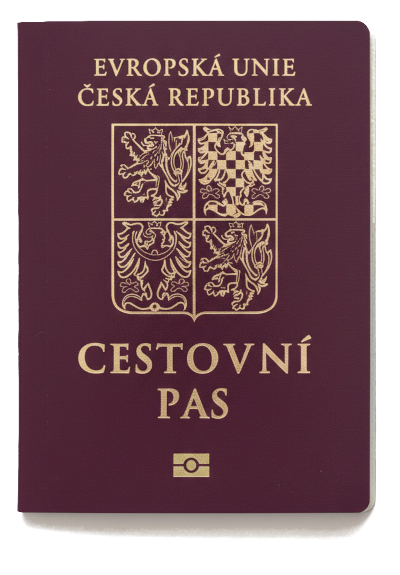
On the day of the 2021 parliamentary elections, my friend gave me his voting slip, so I could vote on his behalf . But at the polling station my Slovak passport was not accepted.
It was not only that I could not vote in Dutch general elections. Over the years, spending most of my time with Dutch people, I became increasingly immersed in the daily news and issues of Dutch society, gradually losing touch with what was happening in Slovakia. As a result, I also repeatedly missed the deadlines to apply for postal votes in Slovakia.
In the end, I ended up not voting for any national government anywhere for years. There is no comprehensive data on this, but some research and survey data suggest that this is a structural problem among expats.
It gets worse
One fine morning my partner and I went to the town hall to find out how we could vote in the then upcoming EU elections. We had only recently moved to Austria and were still navigating its complex bureaucracy.
It turned out that we had to ask to be entered into the voting register and submit a formal declaration. This was about 3 months earlier. The alternative was that we both travel to our own countries of citizenship on the election day to vote there. We did not vote.
This is how inconsistent rules in the EU keep out it's most allied voters. A German study found that despite strong attachment to the European Union, mobile Europeans are less likely to participate in European elections. This is because each member state has different procedures, deadlines, and often inadequate public information.
This might sound like I don't care about casting my vote, but I actually do. I would love to vote. Yet in practice I don't. And it seems to be a structural problem.
What is more, mobile Europeans are, on average, younger than the native population. Millions of younger voters are therefore probably missing from the ballots.
Mobile Europeans are, on average, younger than the native population
Across the EU27, 55% of mobile Europeans are of prime working age (25–54), compared to 38% of the native population. Only 10% are 65 or older, half the native share of 20%.
Data: Eurostat 2024
I am not the first to flag this issue. In 2020 a citizens initiative Voters without Borders collected signatures for the European Commission to let EU citizens vote where they live, for all elections and referendums. They also called the commission to explore extending voting rights to non-EU residents.
Even as the initiative ultimately failed , the Commission did start a process to make it easier for mobile Europeans to learn about and excercise their right to vote and run in European Parliament elections in the country they reside in.
However, this is not enough. The European Union often feels distant from the everyday lives of many of its citizens. But we do have elected representatives in the European Parliament and we should put them to work. MEPs Sven Simon and Ana Catarina Mendes were responsible for the recent legislative changes described above. How about we tell them that these measures do not go far enough?
Why does this matter?
As the EU counts over 366 million eligible voters, 11.8 million, or 3.3% may seem a small number. But is it?
Remember Brexit? What made the difference was just 3.7% of the votes . Today, more than half of Britons think that leaving was a mistake.
Less and less Britons believe leaving the EU was a good idea
In the latest YouGov poll (January 2025), 55% of Britons said it was wrong to leave the EU, while only 30% said it was right — a gap that has been widening since Brexit day.
In hindsight, do you think Britain was right or wrong to vote to leave the European Union? %
Source: YouGov
These are weird times. The USA grows more unpredictable by the day and our governments are tilting rightwards, with growing Euroscepticism. Far-right parties now hold a quarter of the seats in the European Parliament, a historic high.
We should not take our united Europe for granted. The Single Market was never just an economic project, but a political union as well. Yet today, millions of citizens who live, work, and pay taxes in EU countries other than those of their birth remain structurally excluded from full participation in the political life of the places they call home. This despite that the majority of EU citizens agree that citizens living in another EU country should have the right to vote in national elections there.
If Europe is to withstand rising populism and Euroscepticism, we must strengthen its democratic foundations. Allowing people to vote where they live would be a good start.
Afterword
I have written about mobile Europeans because this is the reality I know best. But it is important to note that we are still the most privileged foreigners in Europe.
Non-EU citizens, stateless people, asylum seekers and undocumented immigrants live in the EU with even more limited political rights.
Thanks to my early readers Lenka, Guillaume, Jonathan, Rodrigo, James and Johan for their time and valuable feedback.