



An ode to beans
Even small seeds can reshape large systems.
A single plant family can simultaneously reduce emissions, improve soil health and provide some of the cheapest protein available. It's legumes! Roughly one quarter protein and one quarter carbohydrates, rich in fiber and low in fat. Paired with grains like rice or wheat, they become a complete protein, providing all nine essential amino acids.
Growing up on sour lentil stews and rich bean soups, this essay is born from affection for all that is beans, lentils, peas, chickpeas: lovely, fragrant, nutty, earthy, satisfying.
However, it is also rooted in unease.
As our societies grow wealthier, we consume more and more animal products, even as the environmental consequences of industrial livestock farming become harder to ignore. Our current food production eats deeply into our carbon budget, diminishes water and soil health and reduces forest coverage. Animals are pushed through systems designed primarily for efficiency and scale. All of this puts our future food security in danger.
Yet despite this, the European agricultural policy directs three times more subsidies to the production of animal-sourced foods than to plant-based foods. Millions of taxpayer money are being poured into green-washing campaigns of meat and dairy. Governments speak about sustainability while continuing to subsidise systems that intensify emissions and lock farmers into fertiliser dependence.
This essay is a pocket reference of data-driven evidence for everybody who suspects that the way we currently produce and consume food cannot continue indefinitely.
It is also a guide: for the curious and the unsure, who find it scary or difficult to incorporate legumes into their diet.
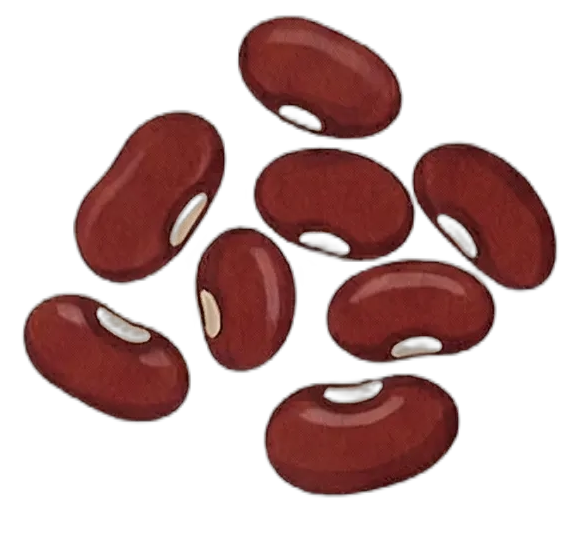


The nature of agriculture
The past hundred years saw a staggering intensification of food production. We now have more food than ever, are more overweight than ever, and also throw away more food than ever. The system that made this possible however, is not sustainable.
Food production is responsible for roughly a quarter to a third of global emissions. This is a huge amount and possibly rightfully so: everybody needs to eat. But not all foods are equal.
Agricultural emissions come from growing plants, keeping animals, transport and packaging. Out of these, transport and packaging are the smaller part. It is therefore way more important what you eat than where it came from. Even if the food from the local farmers market will probably taste better.
Total food emissions ≈ 26% of global GHG (52.3 Gt CO₂-eq, 2010 avg). Source: Our World in Data / Poore & Nemecek (2018).
Why are animal products so intensive? Partly because animals don't produce protein so much as convert it: large quantities of soy, grain, water and land are required to produce comparatively small amounts of meat, milk or eggs. Every step in that chain consumes energy.
Source: Poore & Nemecek (2018), processed by Our World in Data — sum of land-use change, farm, feed, processing, transport, retail, packaging and losses.
Food production emits three main greenhouse gases: methane, CO₂, and nitrous oxide. Methane mainly comes from cow burps and manure, CO₂ from decomposing plant matter and deforestation for pasture and feed crops, and nitrous oxide from synthetic fertilisers.
Modern agriculture depends heavily on nitrogen fertiliser. Producing it is highly energy-intensive and accounts for roughly 2% global emissions, about the same as the aviation industry. And our fertilizer dependence is growing.
Source: Our World in Data — How many people does synthetic fertilizer feed? · sparse observations, smoothed between known years.
This has some real consequences. We saw food prices go up when the fertilizer trade was disrupted after the invasion of Ukraine. And now the scenario is repeating in the Strait of Hormuz debacle.
So what could the world look like if we swapped some of our protein sources?
Jack and the Beanstalk
In the fairy tale, Jack trades the family cow for a handful of beans. It looks like a terrible bargain. The cow is tangible wealth, but the beans are ... well just some beans.
Modern agriculture made a similar trade. Over the past century, farming systems gradually exchanged diversity, soil fertility and resilient local crops for industrial livestock production, synthetic fertilisers and scale.
At first, the bargain made sense. Food became cheaper. Meat became abundant. We could feed more people. But eventually, the giant appeared. At the top of the beanstalk we now find emissions, deforestation, polluted waterways, exhausted soils and dependence on fossil-fuel-intensive fertilisers.
Jack trading a cow for beans sounded ridiculous. But now it might be one of the best trades we can make. Beans namely are truly a magical plant. Thanks to a symbiosis with soil bacteria, legumes fix nitrogen directly from the air, meaning they actually fertilize themselves and the soil around them — from thin air!
That places legumes among the so-called low-input crops: plants that meet most of their own nutritional and protective needs without requiring heavy human intervention. Replacing even a portion of animal protein with legumes would not simply change what ends up on our plates. It would reshape agriculture itself.
While synthetic fertilizers force productivity into the soil from the outside, legumes regenerate fertility from within. Farmers have used beans and peas in crop rotations for centuries because they naturally restore nitrogen to depleted fields.
They would also change the land use. Today, 40% of arable land is used to feed livestock rather than humans. Every step in this chain consumes energy, fertilizer, water and land. Legumes on the other hand provide protein directly.
Source: Poore & Nemecek (2018), supplementary data, retail-weight functional unit · mean of all studies per product.
If humans ate more protein directly from legumes, enormous areas of land could be freed. Replacing even half of the world's main animal products (pork, chicken, beef and milk) with plant-based alternatives would not only cut agriculture's greenhouse gas emissions by nearly a third by 2050, but also almost entirely halt the loss of forests and natural land. We could turn land to forests, wetlands and grasslands, allowing ecosystems to recover and carbon to be stored again in landscapes that are full of life.
This matters even more in a world shaped by climate instability and geopolitical shocks. Modern agriculture depends heavily on fossil fuels, mined nutrients and global fertilizer trade. Legumes, by contrast remain comparatively resilient when these systems fail or costs rise.
And they do all this while remaining one of the cheapest protein sources available.
Source: MPreis 2026, own calculations · each tick is one product, line is the category median.
Perhaps the fairy tale had it backwards all along. The true magic was never the giant in the clouds, but the tiny beans in the soil.
A sustainable diet
Take this paradox: while many countries have enough land to satisfy a home-grown diet, no country can currently feed its entire population through domestic production alone. Keeping and feeding cattle takes a lot of space on our limited planet.
But a more bean-rich future would not necessarily mean giving things up.
Beans are not an obscure substitute food, quite the opposite. Many of the world's great culinary traditions are already centered around legumes: lentil stews, chickpea curries, lentil dahl, tofu, hummus, black beans with rice and countless regional dishes developed long before industrial agriculture existed.
And despite what our current average diets suggest, healthy eating does not require the quantities of animal protein consumed in wealthy countries today.
Source: WWF Livewell project — Eating For Net Zero, technical report 2023. Daily intake per adult (19 – 64).
It's not that meat or dairy must disappear completely. The issue is scale. Eight billion people cannot sustainably eat resource-intensive food every day.
But all of the above is a bit abstract until we talk about practice. And none of this works if eating beans makes you miserable. And for some time, they made me quite miserable.
Beans and you 💚
Bloating and gas are a common side effect of eating legumes. But it doesn’t have to be a struggle, if the transition happens gradually.
Some years ago I was diagnosed with Irritable Bowel Syndrome and beans were my biggest trigger. For someone who grew up on bean soup and lentil stew, this was a bitter pill to swallow. But if eating beans meant waking up at night with severe abdominal pain, I'd rather give them up.
Not every digestive system is the same, and what works for me will not work for everybody. But many people who struggle with legumes benefit from the same principle: start smaller and slower than you think you need to.
The first and most important rule: size matters. Both size of the bean as well as size of the portion. The bigger the bean, the more difficult it is to disintegrate by cooking. This means more physically trapped nutrients arrive to the colon and ferment there causing gas. On top of that, hulled beans are more difficult to digest than split ones, following similar logic: the hull disintegrates less well in cooking and ferments.
Notice that many of the beans usually shelved in our supermarkets, kidney beans, black beans, or chickpeas, usually come from the large end of the spectrum.
Tap any bean for soaking and cook times
Source: own research.
Then there is the size of a portion. I would cook meals where lentils were the main ingredient. I don't do that anymore. They currently make up maybe a handful on my plate, sometimes less. Especially if you are not used to eating legumes, you need to give time to your gut microbiome adjust. You need to start slow. This process may take months, so don't rush it.
Soak legumes well before cooking. Much of the bloating they cause comes from carbohydrates called oligosaccharides, which will partially leach into the soaking water. The smaller the legume, the less important soaking becomes. Moong dal or red lentils don't need to be soaked. Beluga, du Puy, and green lentils, as well as mung beans, adzuki beans, and cowpeas, can also be cooked without soaking if your digestion tolerates them well. Still, I often give them a quick soak: pour boiling water over them and let them sit for about an hour. Larger beans generally benefit from a full 8-hour soak before cooking. I don't eat those that much though.
And finally, unleash the power of antiflatulents and carminatives in the form of spices. From the Indian cuisine: ginger, turmeric, cumin, fennel and asafoetida are beneficial. From the Japanese seaweed such as kombu, or from the European we know the 'bean herb', mountain savory. While kombu and asafoetida prevent fermentation, ginger, fennel, cumin, and savory relax the gut and stimulate digestive enzymes.


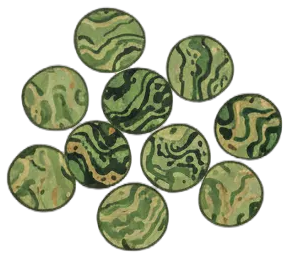
To eat more plant-based, you don't need a dramatic lifestyle change. You don't need expensive "meat replacements" either. Beans, lentils, tofu, and tempeh are already enough.
What matters more is starting small and keeping at it. Start with one or two bean meals a week. Cook lentils on Monday. Try a legume you've never had before: adzuki beans, mung dal, beluga lentils. Try tofu or tempeh. None of this requires giving up animal products completely.
It may seem insignificant, but food companies and supermarkets pay close attention to what people buy. Consumer habits shape what gets produced, promoted, and made affordable.
Policy matters too. Governments decide what is subsidised, what farmers are encouraged to grow, and what ends up on school trays and supermarket shelves. Right now, the animal-based food lobby has the upper hand: this year, EU has banned meat names for plant-based foods. We are in need of agricultural policies that support plant proteins, and put plant-based food at the center of public procurement.
The future we can create is not one of joyless substitutes or dry salads. It's a future where soil is healthier, food is cheaper and more secure, and animals are treated with more care. Where meat and cheese can still have a place, but everyday meals might look more like a warm bowl of lentil stew with rice.
And with that in mind, here are three recipes to get you started. Bon appétit!